TOPS: an alternative to lumbar fusion that preserves movement

Spine surgery has evolved to offer solutions that, in addition to treating the problem causing the pain, aim to preserve the mobility and dynamics of the back.

The TOPS (Total Posterior Spine System) prosthesis is one such alternative. This implant stabilizes the lumbar spine after decompression without completely blocking movement in the operated segment.

This is an option that may be considered for certain patients with lumbar spinal stenosis or spondylolisthesis, when the characteristics of their condition allow this technique to be indicated.
What is the TOPS prosthesis?

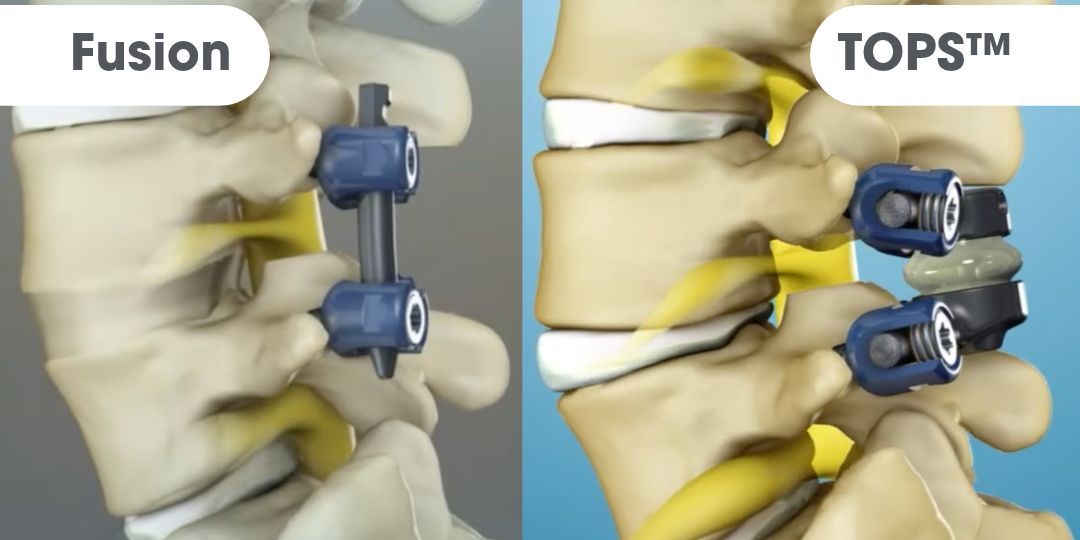
Lumbar spinal stenosis and spondylolisthesis can cause pain and other symptoms resulting from compression of the nerve structures. When conservative treatments are not enough and surgery becomes necessary, one of the traditional options is to free the affected nerves and fuse the vertebrae to stabilize the segment.

Although fusion makes it possible to treat the problem, it eliminates movement in the operated segment and alters how loads are distributed across the rest of the spine. Over time, this overload promotes degeneration of the adjacent levels.

The TOPS prosthesis offers an alternative for selected patients. Instead of locking the vertebrae together, it allows the nerve structures to be decompressed while replacing their function and maintaining mobility.

What advantages does TOPS offer over fusion surgery?

  • Preserving mobility: Unlike conventional fusion, TOPS is designed to allow the operated segment to keep its movement. The implant facilitates flexion, extension, rotation and lateral bending within controlled limits.
  • Relieving nerve compression: The technique makes it possible to perform the necessary decompression extensively in order to free the affected nerve structures.
  • Preserving more natural spinal mechanics: By maintaining part of the mobility, TOPS aims to help patients regain a more natural function of the back. Everyday activities such as walking, bending down or twisting the trunk benefit from the preservation of movement, although recovery varies from case to case.
  • Reducing overload on adjacent levels: Fusion can increase biomechanical stress on the discs and joints of neighboring segments. By preserving movement at the operated level, TOPS aims to reduce this biomechanical alteration and the associated risk of adjacent-level degeneration.


How does the TOPS implant work?

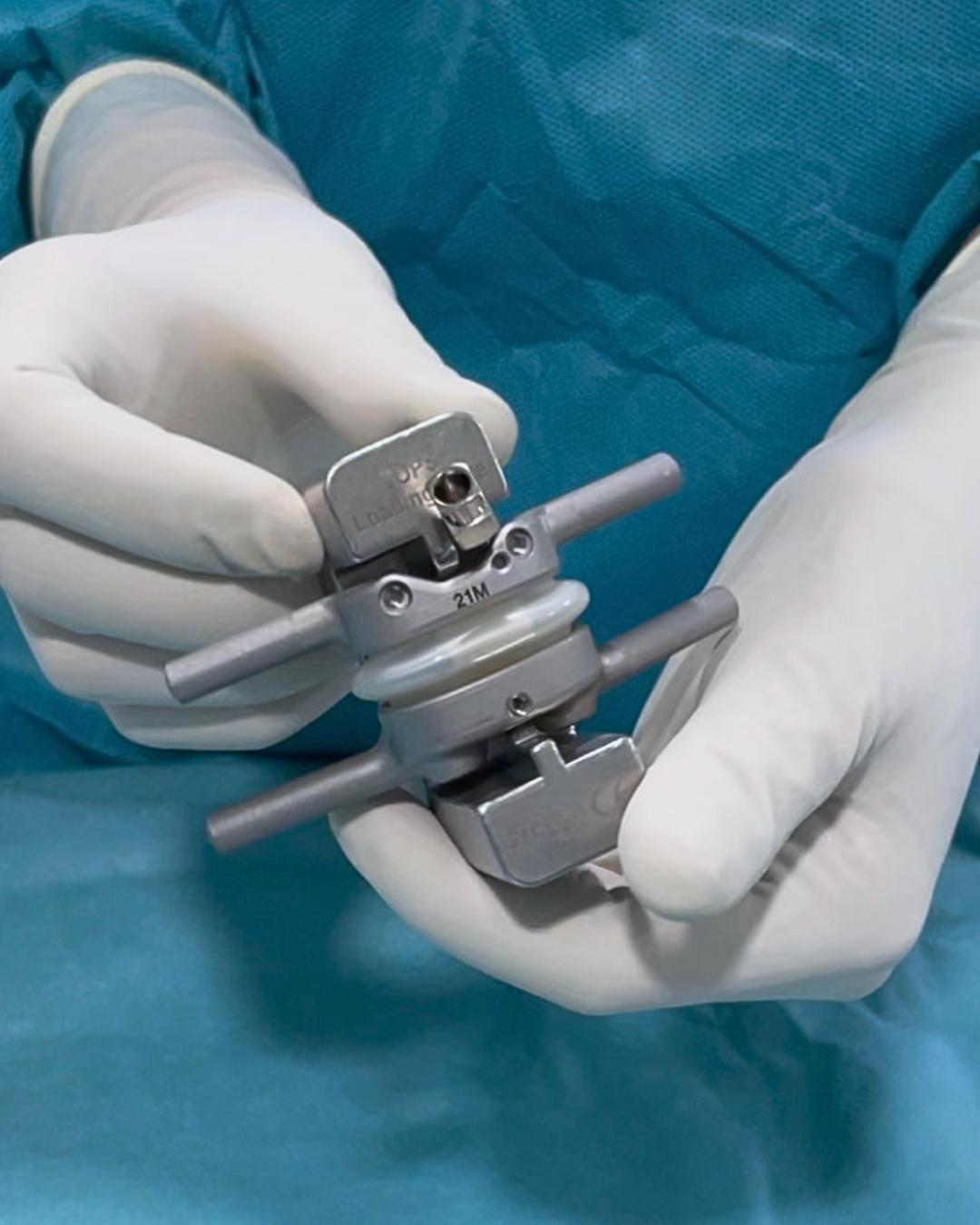
The TOPS prosthesis is fixed to the vertebrae using pedicle screws, similar to the systems used in fusion surgery. The main difference lies in the implant's mechanism.

It consists of two titanium plates connected by an articulated system and covered by a polyurethane sheath that acts as a shock absorber. This design makes it possible to control the movements of the spine in different directions, rather than blocking them completely.

During the procedure, the surgeon performs the decompression needed to free the nerve structures and places the implant to stabilize the operated segment. The aim is thus to combine release of the nerves with preservation of lumbar mobility.

The TOPS surgical technique at Instituto Clavel

Implanting TOPS requires specific knowledge of the anatomy and biomechanics of the spine. It is not simply a matter of replacing a fusion system with another implant, but of applying a technique that makes it possible to stabilize the spine and control movement precisely.

Patient selection, correct placement of the device and proper execution of each step of the procedure are essential to the surgical outcome.

For this reason, the technique requires specialized training, specific practice and experience in spine surgery. Precision during the procedure is essential both for the implant to function properly and for its durability.
 

TOPS at Instituto Clavel

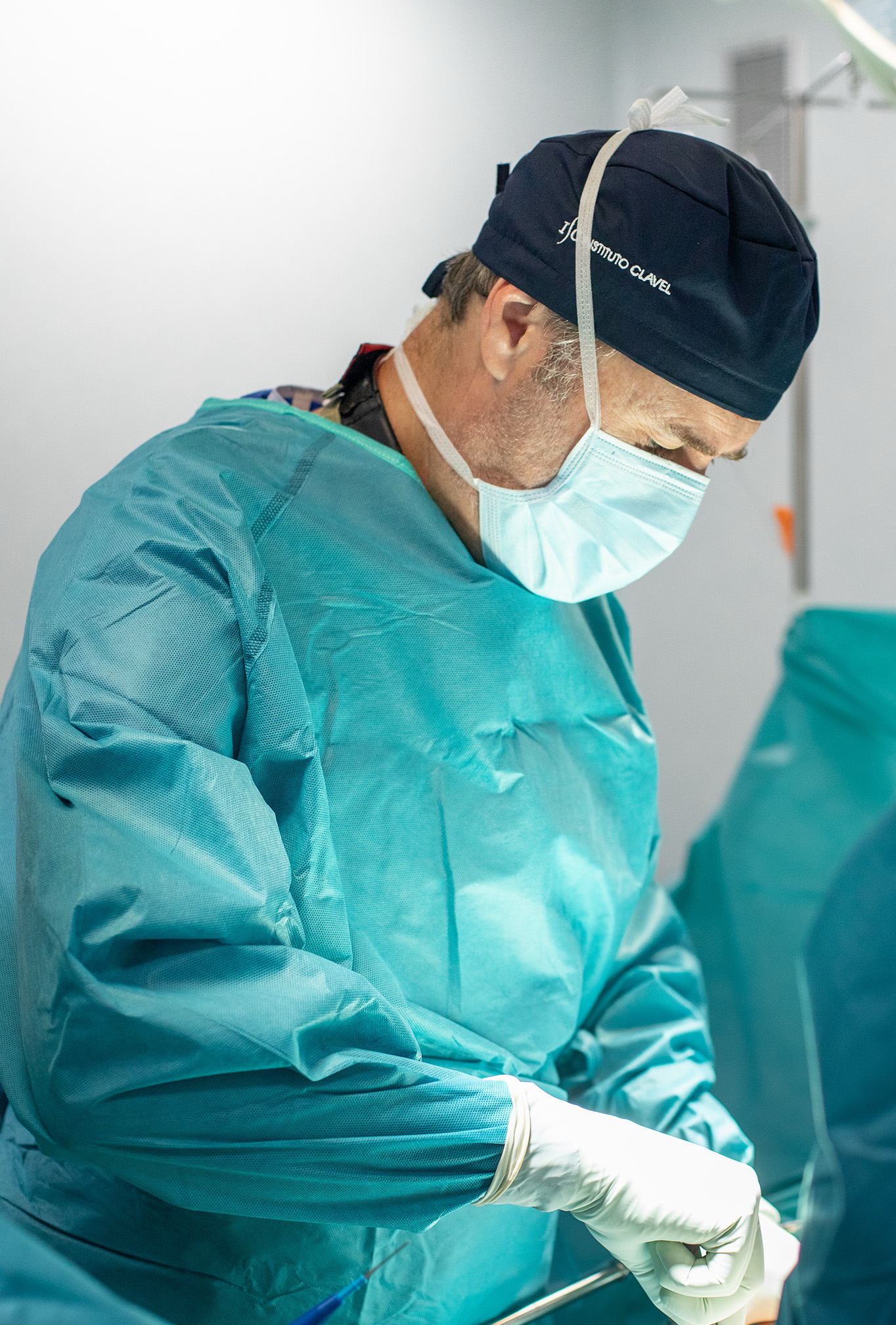
Dr. Pablo Clavel, director of Instituto Clavel, has more than two decades of experience in spine surgery and a career marked by the adoption of innovative surgical techniques.

His interest in alternatives that make it possible to treat spinal conditions while preserving function has led him to incorporate TOPS into his surgical practice, and he is the only neurosurgeon in Spain who performs this type of procedure.

For certain patients with lumbar spinal stenosis or spondylolisthesis, TOPS may represent an alternative to traditional fusion. The possibility of preserving movement in the operated segment opens a therapeutic option that deserves to be assessed on an individual basis.

Who can undergo TOPS surgery?

TOPS has been studied in patients with lumbar spinal stenosis and grade I spondylolisthesis who require surgery to decompress the nerve structures and stabilize the spine.

However, not all patients with these conditions are candidates for this prosthesis. Indication depends on factors such as the diagnosis, the anatomical characteristics and the clinical situation of each person.

Assessment by a spine specialist is essential to determine whether TOPS is a suitable option or whether another surgical alternative is more appropriate.

WOULD YOU LIKE MORE INFORMATION?
TELL US ABOUT YOUR CASE!

Contact us so that we can give you a personalized assessment.

Share on: